
"civil war"
300 article(s) found

Introduction to the characteristics of the manor producing area of fragrant and pure Salvadoran coffee boutique coffee bean flavor
For 13 years after 1932, El Salvador was ruled by Martinez. On May 19, 1934, El Salvador announced the establishment of diplomatic relations with Manchukuo, becoming the second country after Japan to recognize the regime. After the outbreak of the Pacific War in 1941, El Salvador joined the anti-axis camp of Britain, the United States and other countries. In April 1944, due to economic paralysis, intellectuals and scholars

Introduction to the characteristics of the manor producing area with a strong sweet taste of Mexican coffee
The Olmec civilization was born in the tropical jungles of the San Lorenzo Highlands of Central America around 1200 BC. San Lorenzo, the center of the early Olmec civilization, flourished for about 300 years and was destroyed by violence around 900 BC. The center of the Olmec civilization then moved to Raventa near the Gulf of Mexico. The Olmec civilization finally disappeared around 400 BC.

El Pacamara Coffee Flavor Description Processing Method Grinding Scale Introduction to the region of production
El Pacamara Coffee Flavor Description Processing Method Grinding Scale Production Area Introduction Don't underestimate El Pacamara coffee production In its heyday, it was the fourth largest coffee producer in the world, but decades of civil war almost brought down the coffee industry. Fortunately, the war stopped in recent years and the coffee industry recovered. The only benefit of the civil war for the Salvadoran State was that the peasants were left without land.

El Pacamara Estate Coffee Bean Flavor Description Processing Quality Features Introduction
El Pacamara Estate Coffee Bean Flavor Description Treatment Quality Characteristics Do not underestimate the coffee yield of El Salvador. In its heyday, it was the fourth largest coffee producer in the world, but decades of civil war almost brought down the coffee industry. Fortunately, the war stopped in recent years and the coffee industry recovered. The only benefit of the civil war for the Salvadoran State was that the peasants were left without land.

Introduction to the roasting degree of high-quality coffee beans in El Salvador coffee flavor description
In El Salvador, the coffee beans rich in the Kuskabapa region are the best, slightly lighter, fragrant, pure and slightly sour. Like Guatemala and Costa Rica, coffee in El Salvador is graded according to altitude, and the higher the altitude, the better the coffee. The best brand is Pip, whose quality has been recognized by the American Organic Certification Society. In addition

Description of coffee grinding degree, taste and flavor of Renas Manor in El Salvador A brief introduction to the origin of fine coffee
From its independence in 1821 to 1978, Honduras has had 139 coups, making it one of the countries with the most frequent coups in Latin America. The civil war caused chaos and affected economic development, but ironically allowed the ancient coffee to be preserved, and the situation was so chaotic that coffee producers in El Salvador failed to catch up with the renewal of coffee varieties in Central and South America. Honduras in 1821

El Salvador Himalayan Coffee Variety Flavor description introduction of Fine Coffee
In 742, coffee was introduced to El Salvador from the Caribbean (1740). In the mid-19th century, El Salvador's original export pillar Indigo (one of the dyes) received a gradual decline in the development of synthetic dyes in Europe, and coffee gradually became the main export product under the guidance of the government. In 1856, the first 693 bags of coffee beans were shipped to Europe. Until the second World University.
Introduction of varieties produced by grinding scale of coffee beans in El Salvador
Don't underestimate El Salvador's coffee production. In its heyday, it was once the fourth largest coffee producer in the world, but decades of civil war almost dragged down the coffee industry. fortunately, the war has stopped in recent years, and the coffee industry has come back to life. The only benefit that the civil war brought to the country of El Salvador was that the farmers left their fields barren and failed to catch up with the most popular Katimo sun-exposed cultivation train in the past two decades.

A brief introduction to the producing area of Pacamara Coffee Bean by description of Taste and Flavor
Description of taste and flavor of Pacamara coffee beans A brief introduction to the production of coffee in El Salvador. In its heyday, it was once the fourth largest coffee producer in the world, but decades of civil war almost dragged down the coffee industry. fortunately, the war has stopped in recent years, and the coffee industry has come back to life. The only benefit of the civil war to the Salvadoran country is that the farmers left their fields desolate and failed to catch up with the country.

Introduction to the flavor and taste of Mexican Aldumara coffee manor with strong sweetness
The Teotihuacan civilization (Teotihuacn) began around 200 BC, about in the middle of what is now Mexico, and was born after the demise of the Olmec civilization, about the same time as the Mayan civilization. the Teotihuacan built a city with a population of about 50, 000 between the first year of AD and 150, making it the earliest city in the entire American region.

Long aftertaste of El Salvador Mercedes Manor Coffee Flavor and Taste introduction
In January 1932, local elections began, and a large number of Communist Party candidates were elected, but they were not recognized by the government. The Communist Party of El Salvador decided to launch an uprising on the 22nd, but Martinez discovered it. Immediately ordered the arrest of Communist Party leader Farah Bandomatti. The leaderless peasants, armed with machetes, launched a riot as scheduled, but failed under the crackdown by government forces, which immediately retaliated.

Flavor and taste characteristics of El Salvador Himalayan Coffee Manor
Savanna climate. The plain area belongs to the tropical rain forest climate and the mountain area belongs to the subtropical forest climate. The average annual temperature is 25-28 ℃. The annual precipitation is more than 1800 mm in mountain areas and about 1000 mm in coastal areas. The rainy season is from May to October. Don't underestimate El Salvador's coffee production. In its heyday, it was the world's fourth largest coffee producer, but decades of civil war almost dragged down coffee

Introduction to the flavor description of the baking and growth process of Pacamara raw coffee beans
How do Pacamara Raw Coffee beans roast and grow Flavor description describes the coffee production in El Salvador. In its heyday, it was once the fourth largest coffee producer in the world, but decades of civil war almost dragged down the coffee industry. fortunately, the war has stopped in recent years, and the coffee industry has come back to life. The only benefit that the civil war brought to the country of El Salvador is that the farmers left their fields desolate and failed to catch up with nearly 20 years.

Introduction of Coffee Flavor description treatment in Renas Manor in El Salvador
Coffee production in El Salvador. In its heyday, it was once the fourth largest coffee producer in the world, but decades of civil war almost dragged down the coffee industry. fortunately, the war has stopped in recent years, and the coffee industry has come back to life. The only benefit of the civil war to the Salvadoran country is that the farmers left their fields barren and failed to catch the most popular Katimo sun-exposed cultivation train in the past two decades, thus preserving the ancient

Introduction to the flavor and taste characteristics of El Salvador Himalayan coffee manor with excellent taste balance
El Salvador was originally inhabited by the Mayan Indians. Scenery of the Republic of El Salvador (11 pictures) was colonized by Spain in 1524. Independence was declared on September 15, 1821 and later became part of the Mexican Empire. In 1823 the empire collapsed and El Salvador joined the Union of Central America. The Communist Party of China was declared on February 18, 1841 after the disintegration of the Union in 1838.

El Salvador Coffee Manor with excellent taste introduction to boutique coffee
The civil war caused chaos and affected economic development, but ironically allowed the ancient coffee to be preserved, and the situation was so chaotic that coffee producers in El Salvador failed to catch up with the renewal of coffee varieties in Central and South America. El Salvador produces 100% Arabica coffee, of which 68% is Bourbon, Coffea arabica var. Bourbon), 29% Pacas, the rest

Introduction to the special and elegant Mexican coffee flavor and taste of the fine coffee in the manor area.
The Olmec civilization (Olmec) is the oldest known American civilization. It existed from about 1200 BC to 400 BC and is located in the rainforest of what is now south-central Mexico and is famous for its large head statues. The Olmec civilization was born in the tropical jungles of the San Lorenzo Highlands of Central America around 1200 BC. San Lorenzo was an early Olmec.
Introduction to the Coffee History of Rwanda and Coffee Flavor of Abakundakawa Cooperative
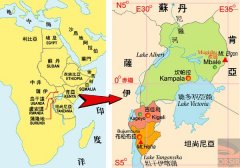
Rwanda (Rwanda) from Central Africa, neighboring to the north (Uganda), east (Tanzania), south (Burundi), west (Republic of the Congo ~ old say), is a truly standard landlocked country (see figure 1). All products, whether to go up to the sky or to the sea, export or import must be agreed with neighboring countries, or it is a dead end. Take a look at all the neighbors around it.

Sudan's coffee industry is on the verge of danger, and only a very small amount of coffee is exported out of print.
The civil war in Sudan nearly destroyed coffee production. Two decades of disastrous civil war in southern Sudan has claimed millions of lives and caused untold damage to rural areas, including the coffee industry. Robbins coffee is now grown in the south as in the past, while Arabica coffee, which used to be wild, is grown in the north and east of the country. In history
Introduction to the variety treatment method for describing the characteristics of grinding degree of El Salvador Himalayan coffee
A brief History of Coffee production in 1742, coffee was introduced to El Salvador from the Caribbean (1740). In the mid-19th century, El Salvador's original export pillar Indigo (one of the dyes) received a gradual decline in the development of synthetic dyes in Europe, and coffee gradually became the main export product under the guidance of the government. In 1856, the first 693 bags of coffee beans were shipped to Europe. all long